How do websites detect VPNs? The signals behind the decision
How websites detect VPNs using IP data, connection checks, browser context and device history. Learn what each method establishes and how to evaluate it.
Read article →Understand the signals, evaluate the tools and make better decisions about masked traffic. Practical articles on detection methods, proxy APIs, risk scores, location evidence and VPN checks.
How websites detect VPNs using IP data, connection checks, browser context and device history. Learn what each method establishes and how to evaluate it.
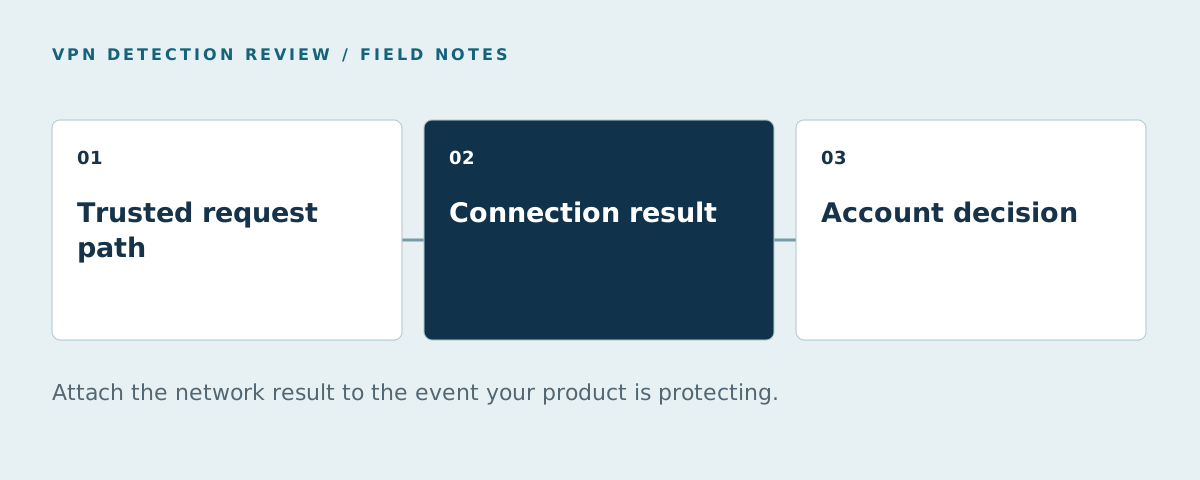
Read article →Build a proxy detection workflow from the correct visitor IP to an account decision. Compare network fields, identity context, integration failures and cost.
Read article →Evaluate residential proxy detection with rotating exits, device context and independent account labels. Use a practical pilot plan and reporting checklist.
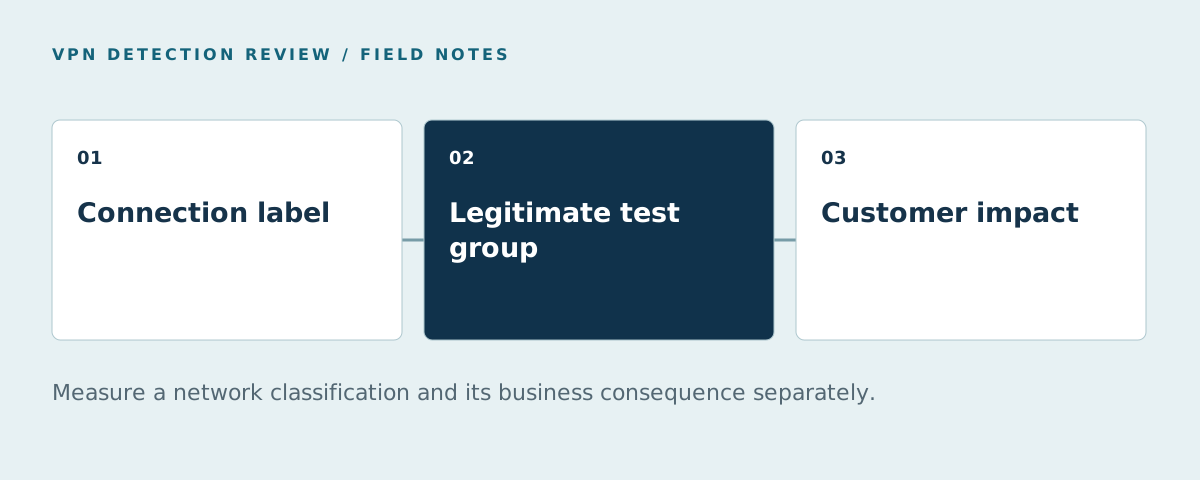
Read article →Reduce proxy detection false positives by separating network labels from account actions. Measure legitimate customer impact across VPNs, relays and shared IPs.
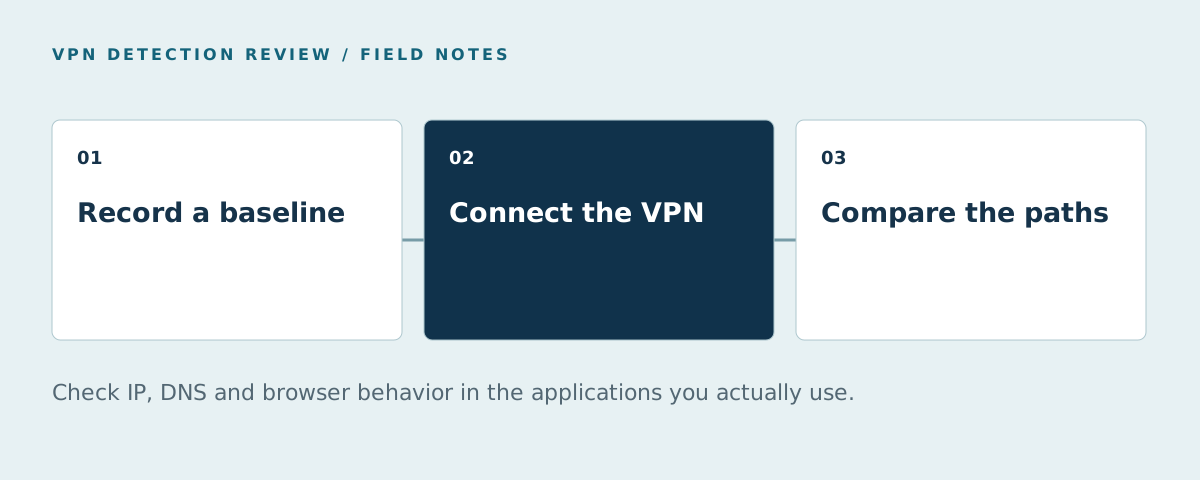
Read article →Check if your VPN is working with a public-IP baseline, IPv4 and IPv6 checks, DNS review and WebRTC tests. Verify the apps and connection paths you use.
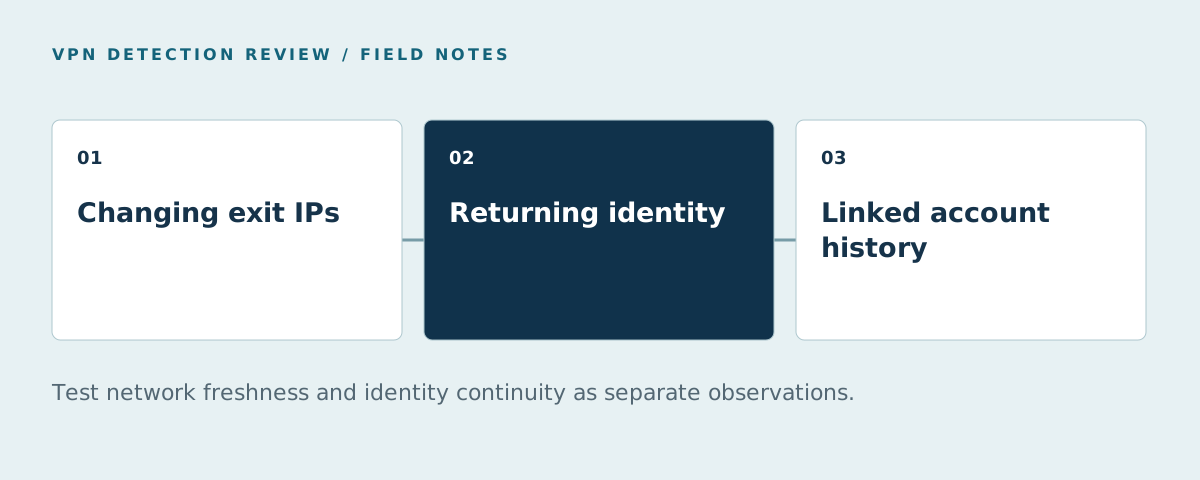
Read article →Compare device intelligence behind VPNs and incognito sessions. Evaluate identity persistence, incorrect links, plan access and account context with a pilot.
Read article →Plan VPN and proxy detection for marketplace registrations, seller logins and offers. Compare device context, residential coverage, customer impact and cost.
Read article →Integrate a proxy detection API with trusted client IPs, IPv6, explicit VPN and relay fields, and a safe path for missing results. Includes a pilot checklist.
Read article →Interpret an IP fraud score by its unit, scale, reasons and freshness. Learn why an IP result differs from visit or transaction risk before setting thresholds.
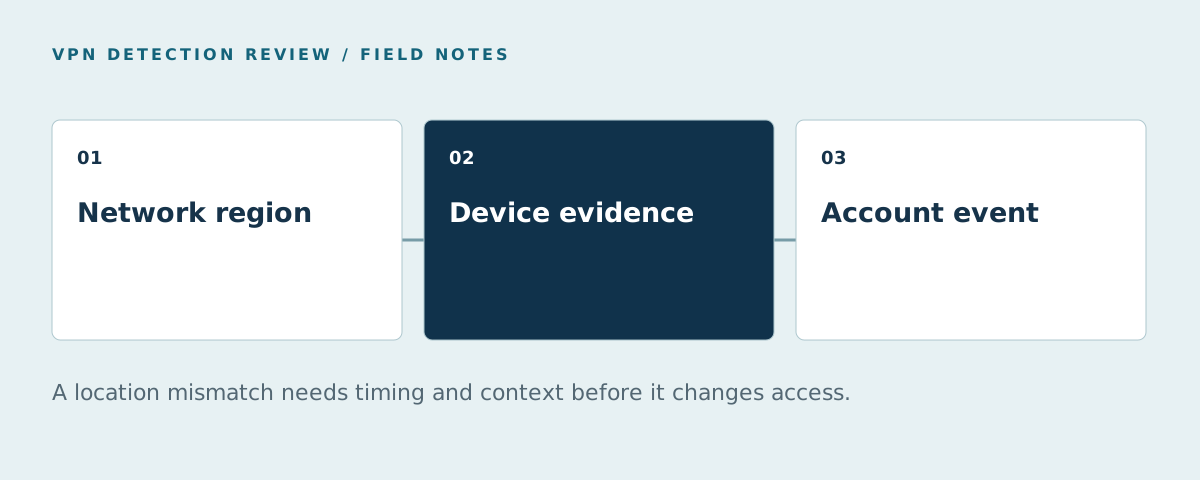
Read article →Compare IP region, browser location, timezone, device and account history for location spoofing detection. Test travel, relays and missing permission.
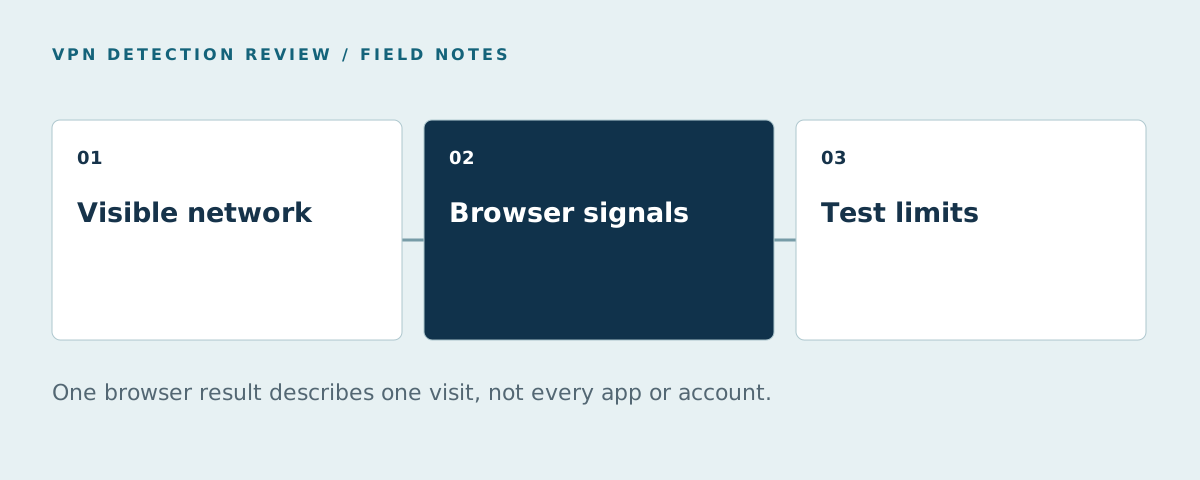
Read article →See what an anonymity check reveals about your IP, VPN or proxy label and browser properties. Learn the practical limits of one test and how to repeat it.
Read article →Explore checkers, demos and evaluation routes →
Compare account takeover, bot and duplicate-account controls for masked logins, with vendor choices, recovery paths and a trusted backend decision.
Prevent repeated trial, coupon and referral claims with account evidence, atomic benefit grants and a practical identification-volume cost example.
Understand browser, audio and cookieless recognition across network changes, compare device APIs and keep visitor analytics separate from identity.
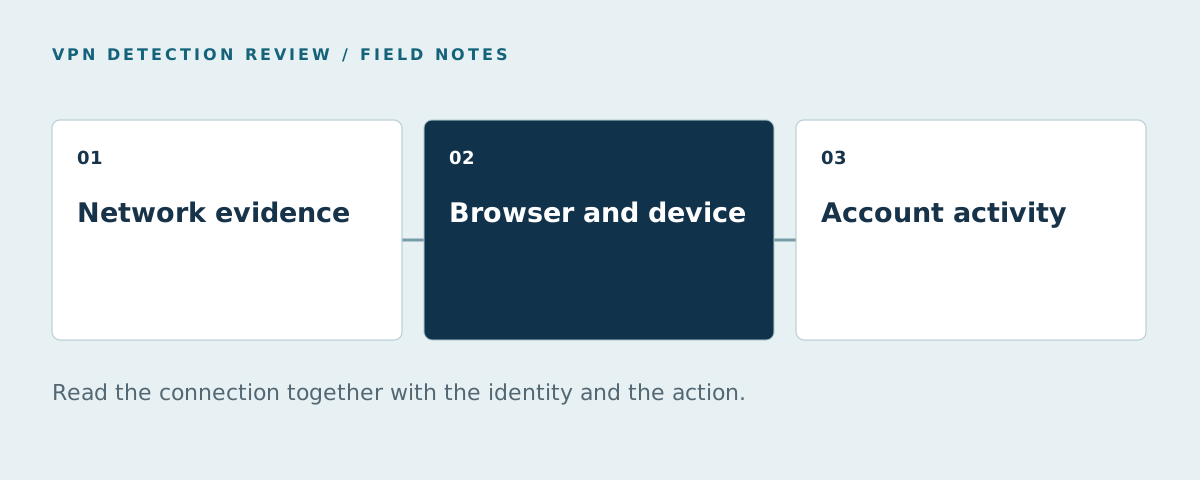
Compare VPN, residential proxy and relay evidence, API inputs, location uncertainty and device context before applying login or payment restrictions.
Choose controls for guest checkout, card testing, returns, marketplaces and advertising, while linking network evidence to the actual commerce event.
Compare fraud software, current self-serve prices and vendor scope, with separate answers for account support, voice security and brand protection.